[o texto em português encontra-se abaixo]
[EN]
Hello, and thank you for joining me here.
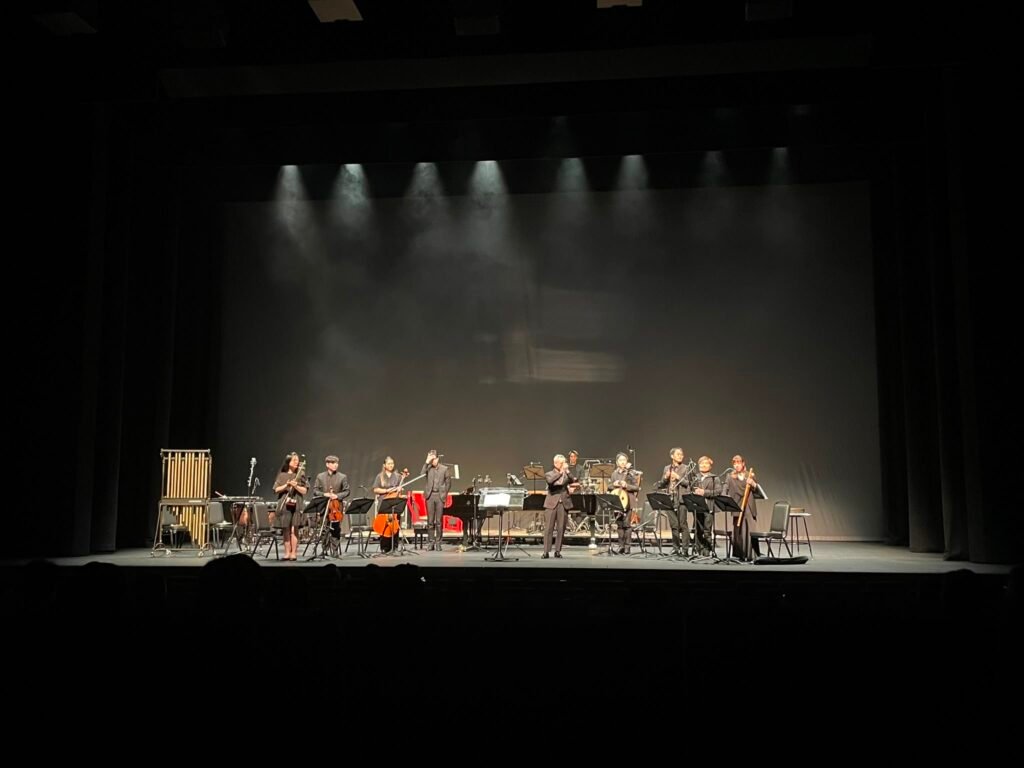
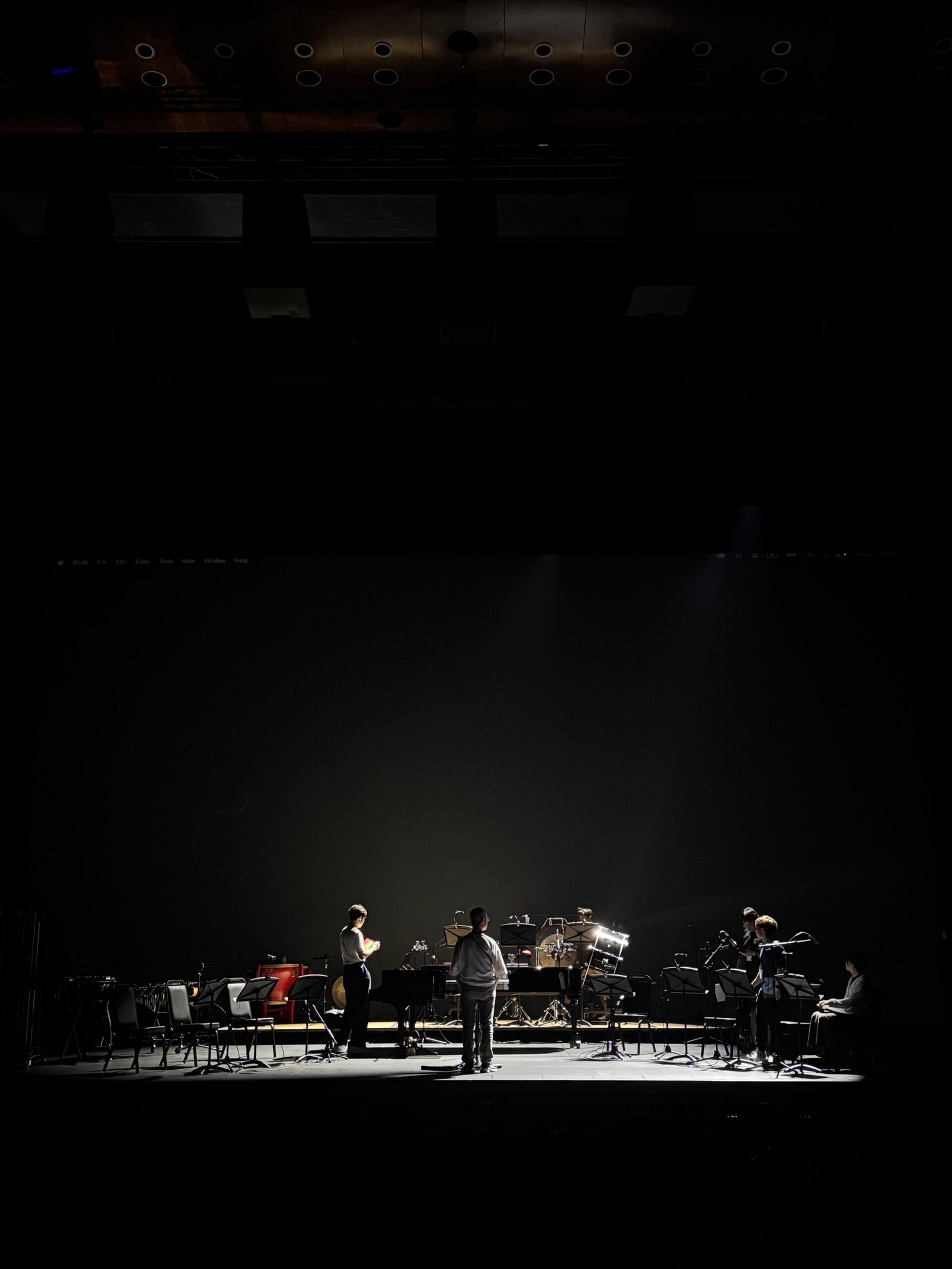
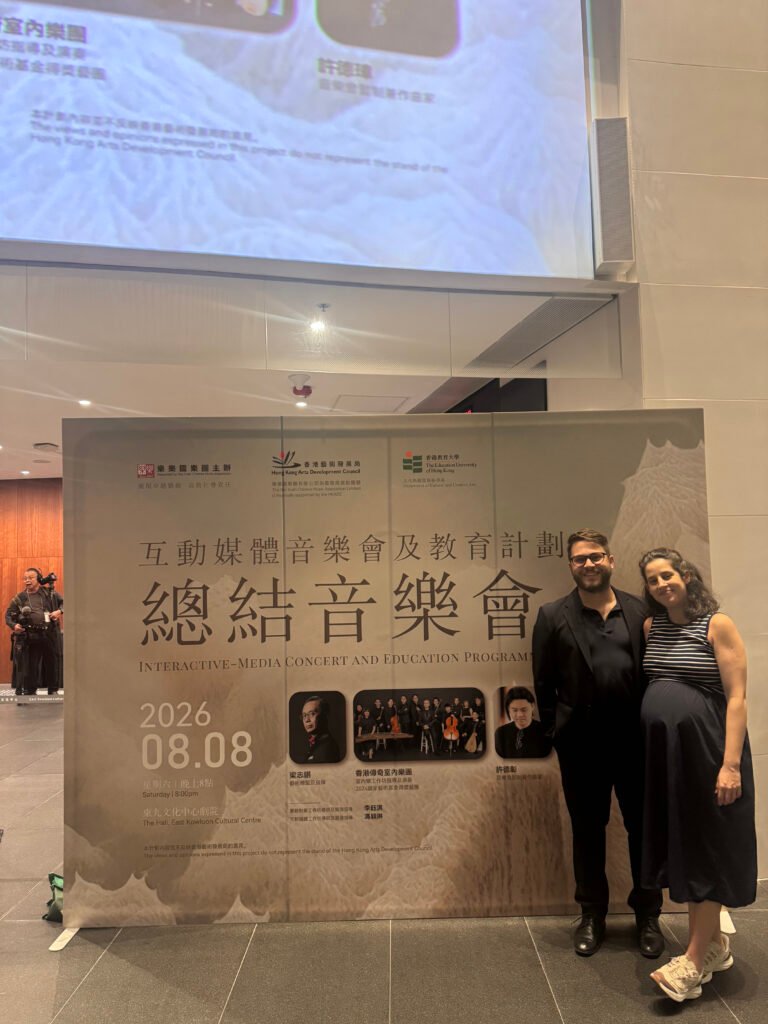
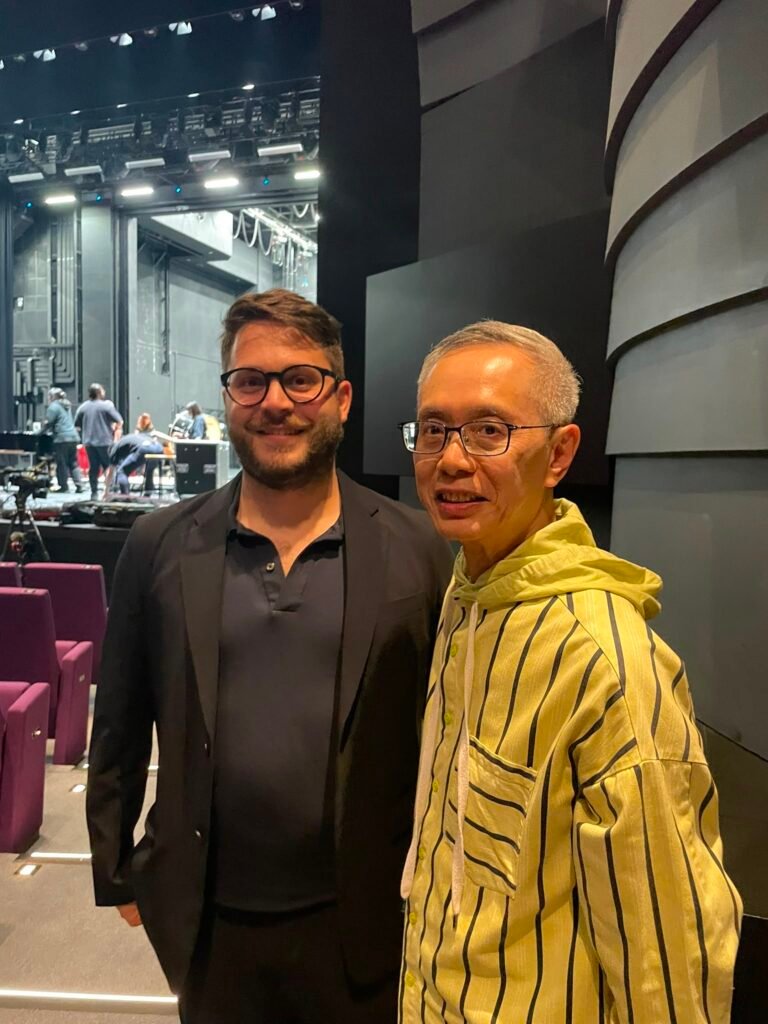
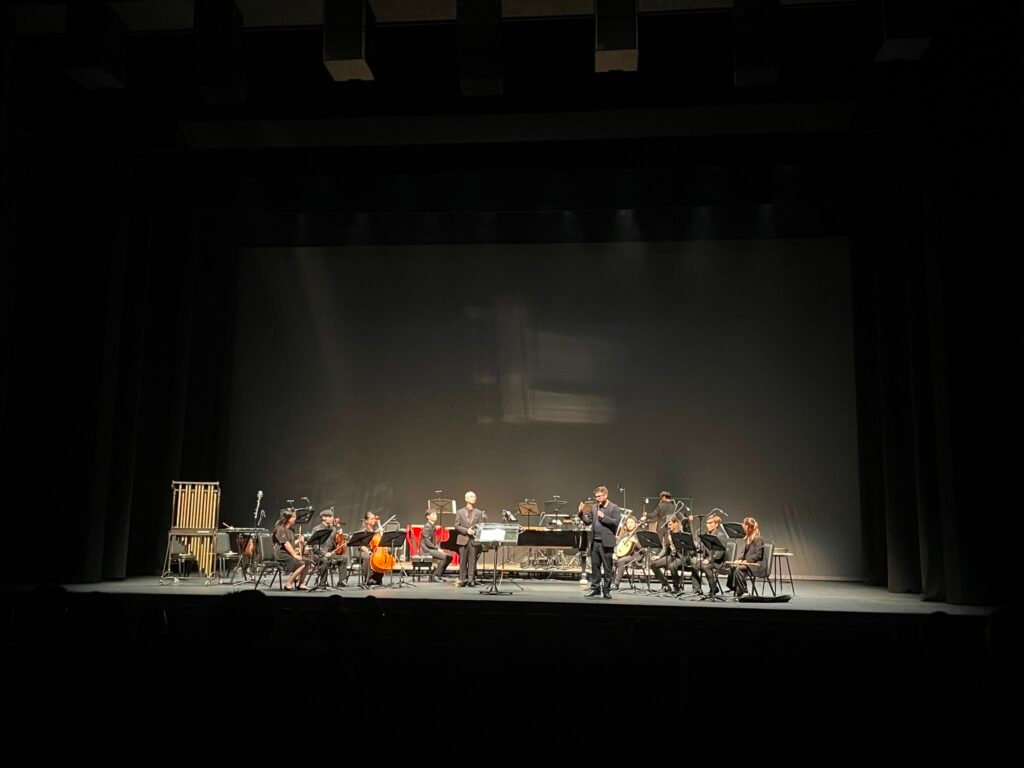
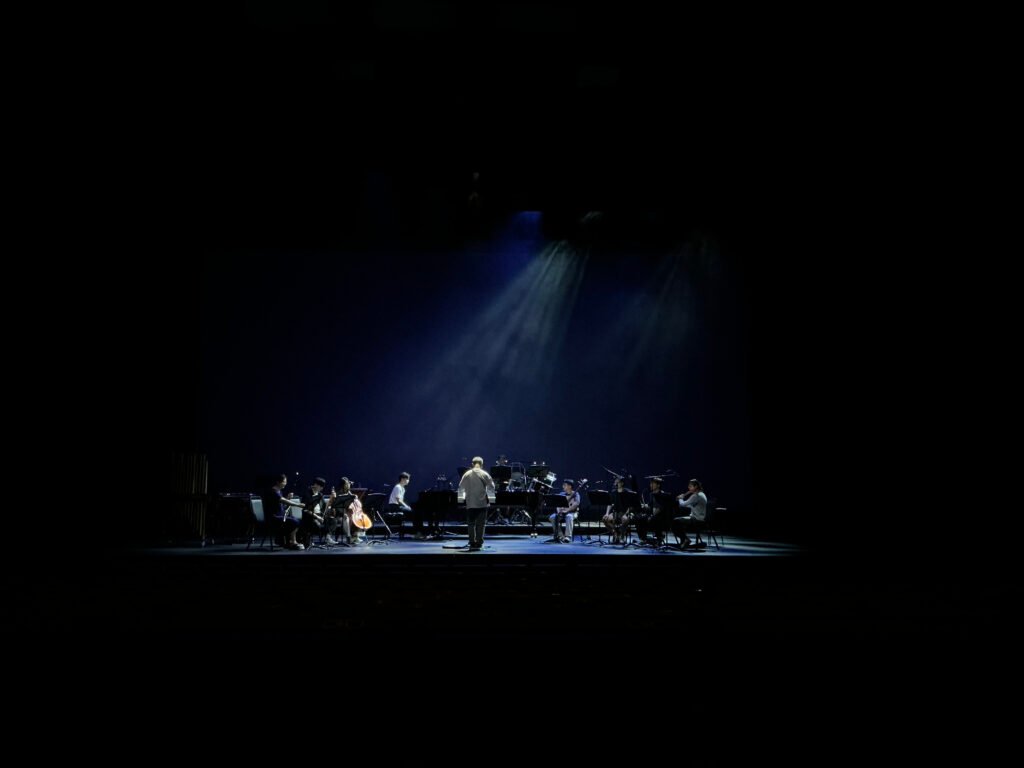
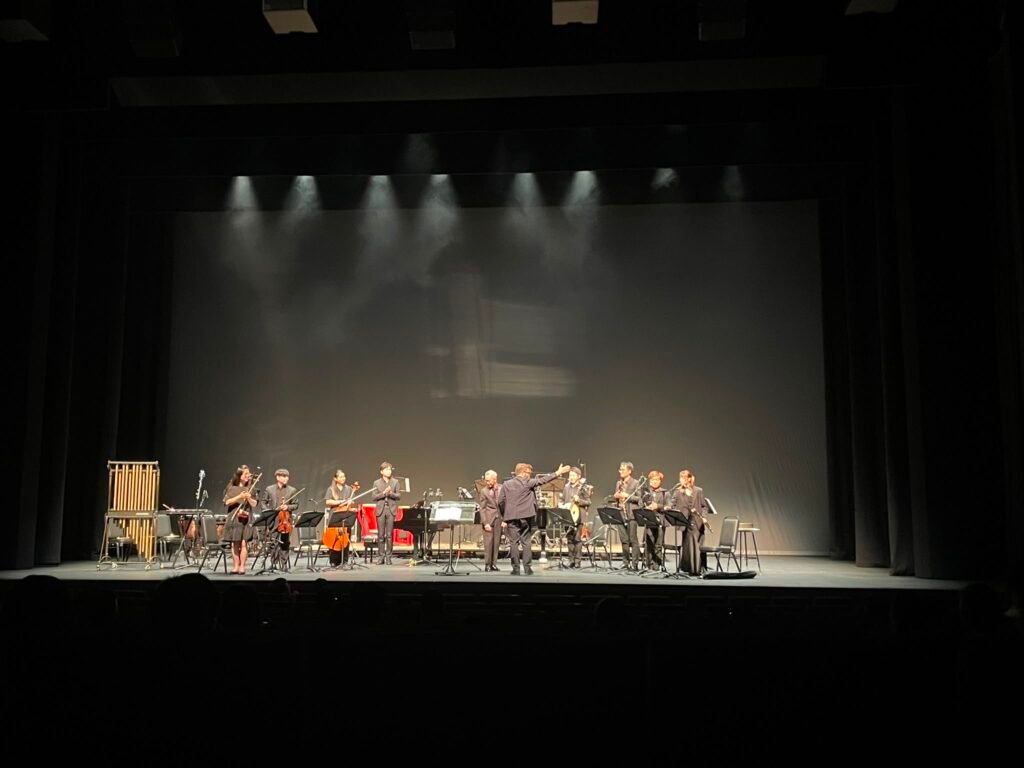
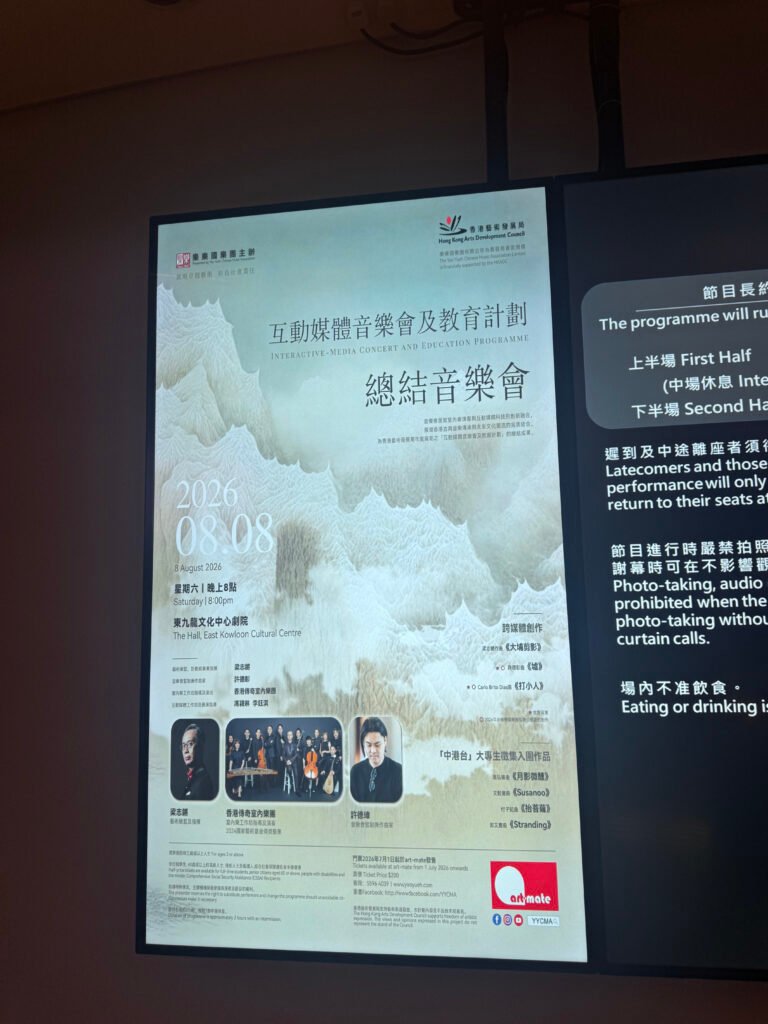
On 8 August, the Hong Kong Legends Ensemble, conducted by Dr Leung Chi-cheung, premiered my piece tides, my most recent piece. The core practice of the Hong Kong Legends Ensemble is to combine Western and Chinese instruments, creating a distinctive sonic world where contrasting tonal colours meet and intertwine. When I was commissioned to write tides for the ensemble, I embraced a unique mixed instrumentation: Dizi, Sheng, Clarinet in B♭, Zhongruan, Percussion, Piano, Erhu, Violin, and Violoncello, being this the first time I composed for traditional Chinese instruments and finding how they converse with the Western ensemble and my own musical language. Now that the premiere has taken place, and I had the chance to work with Dr Leung Chi-cheung and the wonderful musicians of the ensemble, I would like to share a brief reflection on the process and the development of ideas that shaped the piece.
tides emerged from the idea of movement. My first idea was to take the movement of people, memories, and stories that continuously reshape who we are, influenced by the awareness that culture is not a fixed identity, but a shifting and porous landscape. Hong Kong carries traces of countless journeys: arrivals, departures, temporary stays that become longer than previously planned, and permanent presences that slowly transform. The city feels like a place of constant transition: a point of arrival and departure where different cultures coexist, overlap, and, perhaps, gradually transform one another. The sea, always present, became a natural metaphor in this context. It separates and connects at the same time; it carries stories without ever fixing them in place. It is through these tides that identity, memory, and belonging are continually shaped by movement, encounter, and change. Every crossing leaves something behind and brings something new, creating layers of experience that coexist without fully merging.
This idea of movement, of connection, this idea of gradual transformation, also came due to the fact that I had to use both Chinese and Western instruments, bringing those instruments together into my own musical language.
I always seek to represent my path through my music, i.e. every piece I write is immensely influenced by the period during which this process takes place. Sometimes I openly represent in music my life experience, my thoughts, my own fears, or what makes me happy; sometimes this representation comes through quotations from other artworks I am into at that particular moment, or in another way I manifest different thoughts about the past, present, or future. In a certain way, I am influenced by S. Hall’s idea that an identity is influenced not only by a fixed root but also through the different “routes” (the diverse journeys, trajectories, and networks) one follows, at least that is what I bring to music. In many of my pieces this is not noticeable, but for me, as a composer, it is important to add that layer to my craft.
Following all this, tides also became intimately personal. While composing this piece, I was experiencing another kind of transition: the anticipation of becoming a parent. This introduced a different awareness of time, one marked by cycles of waiting, uncertainty, and a quiet but persistent sense of change. So I translated that into the music, using the phrasing and silences to represent it. tides, then, became a space where different layers intersect: the public and the private, the cultural and the personal, the familiar and the unknown.
Bringing the sea metaphor into the physical space of the score meant finding a shared language between two distinct musical worlds. Technically speaking, this was a challenging process. Working with another culture in my music is always a delicate and enriching process as it opens new sonic, historical, and human perspectives. At the same time, it is also challenging because I am conscious that these materials do not simply belong to me. They must be approached with respect, precision, and sensitivity. As it was the first time writing for these instruments, I had two goals: (1) to understand how their sonority could fit in my musical language while (2) respecting their tradition and characteristic timbre.
Writing for the Dizi, Sheng, Zhongruan, and Erhu meant entering a sound world with its own traditions, techniques, expressions, and sound memories. I did not want to use these instruments merely as external colours within my existing musical language. Instead, I wanted to understand their potential, finding a point of connection between them and my musical language. Because of this, a fundamental part of this process was the opportunity to meet and work closely with the musicians who performed the piece. These encounters were essential. Through listening, asking questions, and experimenting together, I was able to rethink my own music ideas in relation to the instruments.
In many ways, tides is the result of this dialogue: a space where my compositional voice attempts to meet these timbres not by imposing itself, but by adapting, listening, and blending. I wanted the piece to emerge from dialogue, so I sought to create the conditions for something new to emerge through the interaction of the different timbres. Obviously, there is always a certain fragility in this process, perhaps a risk of misunderstanding, simplification, or distance, but also a great potential for transformation. Rather than trying to “merge” cultures in a simplistic way, I became more interested in the spaces between them: moments when things do not fully align, where different sonic identities coexist without being fully resolved.
Alongside the score, I created a visual piece that breathes with the music, serving as an abstract video journal of my journey in Hong Kong over the past two years. Composed of personal video fragments recorded since 2024, the video traces the shifting geography of my daily life, capturing the different places I have lived and the landscapes that have framed my presence here. Perhaps influenced by Impressionist painting, the imagery does not offer a literal narrative, but rather a fluid, visual echo of the music. Through subtle layers and gentle transitions, it reflects my own internal transformation: a quiet document of how a place shapes an observer, and how its tides gradually become part of who we are.
Working with musical elements connected to another culture – different from my own – is a way of entering into a different level of relationship, building on curiosity, respect, and care. Only then can music become a genuine space of encounter rather than a simple collage of references. I believe I found some answers on how to handle this, but more questions would arise – and I am sure I will share them in the future.
This exploration inevitably presented challenges for the ensemble. In striving to fold these instruments into my sonic world, I wrote extended techniques that, although established in modern performance, required delicate physical and acoustic adjustments when played together. The true difficulty was not individual virtuosity, but the shared coordination required to make these contrasting timbres speak with a unified, delicate voice.
Once again, I would like to express my sincere gratitude to the Hong Kong Legends Ensemble, to Dr Leung Chi-cheung, and to all the musicians involved in the performance. Their openness, trust, and commitment made it possible for me to explore new directions and take risks that I might not otherwise have taken.
Thank you for joining me in this reflection.
[PT]
Olá, e obrigado por estarem aqui.
No dia 8 de agosto, o Hong Kong Legends Ensemble, sob a direção do Dr. Leung Chi-cheung, estreou tides, a minha peça mais recente. O Hong Kong Legends Ensemble dedica-se fundamentalmente a combinar instrumentos ocidentais e chineses, criando um universo sonoro próprio, onde cores e timbres contrastantes se encontram e interligam. Quando recebi a encomenda para escrever tides para o Hong Kong Legends Ensemble, foi-me apresentada a hipótese de escolher vários instrumentos da sua formação. Decidi escolher Dizi, Sheng, Clarinete em Si♭, Zhongruan, Percussão, Piano, Erhu, Violino e Violoncelo. Esta foi a primeira vez que compus para instrumentos tradicionais chineses, o que me permitiu explorar a forma como estes poderiam dialogar com os instrumentos ocidentais e com a minha própria linguagem musical. Agora que a estreia já teve lugar e tive a oportunidade de trabalhar com o Dr. Leung Chi-cheung e com os fantásticos músicos do ensemble, gostaria de partilhar uma breve reflexão sobre o processo e o desenvolvimento de ideias que moldaram a obra.
tides nasceu da ideia de movimento. O meu ponto de partida foi o movimento das pessoas, das memórias e das histórias que continuamente reformulam quem somos, influenciado pela perceção de que a cultura não é uma identidade fixa, mas sim uma paisagem fluida. Hong Kong carrega marcas de inúmeras viagens: chegadas, partidas, estadias temporárias que se tornam mais longas do que o previsto e presenças permanentes que se vão transformando devagar. A cidade transmite a sensação de ser um lugar de transição constante: um ponto de chegada e de partida onde diferentes culturas coexistem, se sobrepõem e, talvez, se transformem gradualmente umas às outras. O mar, sempre presente, tornou-se uma metáfora natural neste contexto. Separa e conecta ao mesmo tempo; carrega histórias sem nunca as fixar num único lugar. É através destas marés (tides) que a identidade, a memória e a pertença são continuamente moldadas pelo movimento, pelo encontro e pela mudança. Cada travessia deixa algo para trás e traz algo de novo, criando camadas de experiência que coexistem sem se fundirem por completo.
Esta ideia de movimento, de conexão e de transformação gradual surgiu também pelo facto de ter de utilizar instrumentos chineses e ocidentais, reunindo-os na minha própria linguagem musical.
Procuro sempre representar o meu percurso através da minha música, ou seja, cada peça que escrevo é profundamente influenciada pelo período em que esse processo decorre. Por vezes, represento abertamente na música a minha experiência de vida, os meus pensamentos, os meus receios ou aquilo que me faz feliz; outras vezes, essa representação surge através de citações de outras obras de arte às quais estou mais atento num determinado momento, ou manifesta-se sob a forma de reflexões sobre o passado, o presente ou o futuro. De certa forma, sou influenciado pela ideia de S. Hall de que a identidade não é determinada apenas por uma raiz fixa, mas também pelas diferentes “rotas” (as diversas jornadas, trajetórias e ligações) que percorremos. Ou, pelo menos, é isso que procuro levar para a música. Em muitas das minhas peças, isto não é perceptível, mas, para mim, enquanto compositor, é importante adicionar essa camada ao meu trabalho.
Na sequência de tudo isto, tides tornou-se também intimamente pessoal. Esta peça foi escrita numa altura de transição, também, na minha vida privada, marcada pela expectativa de me tornar pai. Isto trouxe uma nova consciência do tempo, marcada por ciclos de espera, incerteza e uma silenciosa, mas persistente, sensação de mudança. Traduzi essa vivência para a música através da forma como construí as frases e procurei usar silêncios. Assim, tides tornou-se um espaço onde cruzam diferentes camadas: o público e o privado, o cultural e o pessoal, o familiar e o desconhecido.
Trazer a metáfora do mar para o espaço físico da partitura significou encontrar uma linguagem comum entre dois mundos musicais distintos. Em termos técnicos, foi um processo exigente e desafiante. Trabalhar com outra cultura na minha música é sempre algo delicado e enriquecedor, pois abre novas perspetivas sonoras, históricas e humanas. Ao mesmo tempo, é também um desafio, porque tenho consciência de que este material não me pertence simplesmente. Tem de ser abordado com respeito, rigor e sensibilidade. Sendo a primeira vez que escrevia para estes instrumentos, tinha dois objetivos: (1) compreender como a sua sonoridade se poderia integrar na minha linguagem musical e (2) respeitar a sua tradição e o seu timbre característico.
Escrever para Dizi, Sheng, Zhongruan e Erhu significou entrar num universo sonoro com as suas próprias tradições, técnicas, expressões e memórias sonoras. Não queria usar estes instrumentos apenas como cores externas à minha linguagem musical, mas sim procurar compreender o seu potencial, encontrando um ponto de ligação entre eles e a minha linguagem musical. Por isso, uma parte fundamental deste processo foi a oportunidade de me reunir e trabalhar de perto com os músicos que interpretaram a peça. Estes encontros foram essenciais: através da escuta, de perguntas e da experimentação conjunta, pude repensar as minhas próprias ideias musicais em relação aos instrumentos.
Em muitos aspetos, tides é o resultado deste diálogo: um espaço onde a minha voz composicional tenta ir ao encontro destes timbres não por imposição, mas adaptando-se, escutando e fundindo-se. Queria que a peça emergisse do diálogo, por isso procurei criar as condições para que algo novo surgisse através da interação dos diferentes timbres. Como é evidente, há sempre uma certa fragilidade neste processo – talvez o risco de incompreensão, simplificação ou distanciamento -, mas também um enorme potencial de transformação. Mais do que tentar “fundir” culturas de forma simplista, interessei-me pelos espaços entre elas: momentos em que as coisas não se alinham totalmente, onde diferentes identidades sonoras coexistem sem se resolverem por completo.
A par da partitura, criei um vídeo em sintonia com a música, que funciona como um diário abstrato do meu percurso em Hong Kong ao longo dos últimos dois anos. Composto por fragmentos de vídeos pessoais gravados desde 2024, o vídeo regista a geografia em mudança do meu dia a dia, captando os diferentes lugares onde vivi e as paisagens que emolduraram a minha presença aqui em Hong Kong. Talvez innfluenciada pela pintura impressionista, a imagem não oferece uma narrativa literal, mas um eco visual e fluido da música. Através de camadas subtis e transições suaves, reflete a minha própria transformação interna: um registo discreto de como um lugar molda quem o observa e de como as suas marés se tornam gradualmente parte de quem somos.
Trabalhar com elementos musicais ligados a outra cultura, diferente da minha, é uma forma de entrar num nível distinto de relação, assente na curiosidade, no respeito e no cuidado. Só assim a música se pode tornar um verdadeiro espaço de encontro, em vez de uma simples colagem de referências. Acredito ter encontrado algumas respostas sobre como lidar com isto, mas sei que surgirão mais perguntas, que certamente partilharei no futuro.
Esta exploração trouxe inevitavelmente desafios para os instrumentistas. Ao tentar integrar estes instrumentos no meu universo sonoro, escrevi técnicas estendidas que, embora consolidadas na prática de execução contemporânea, exigiram ajustes físicos e acústicos delicados quando tocadas em conjunto. A verdadeira dificuldade não esteve no virtuosismo individual, mas sim na coordenação coletiva necessária para que estes timbres contrastantes falassem com uma voz unificada e delicada.
Mais uma vez, gostaria de expressar a minha sincera gratidão ao Hong Kong Legends Ensemble, ao Dr. Leung Chi-cheung e a todos os músicos envolvidos na interpretação. A sua abertura, confiança e empenho tornaram possível explorar novos caminhos e assumir riscos que, de outra forma, talvez não tivesse tomado.
Obrigado por se juntarem a mim nesta reflexão.